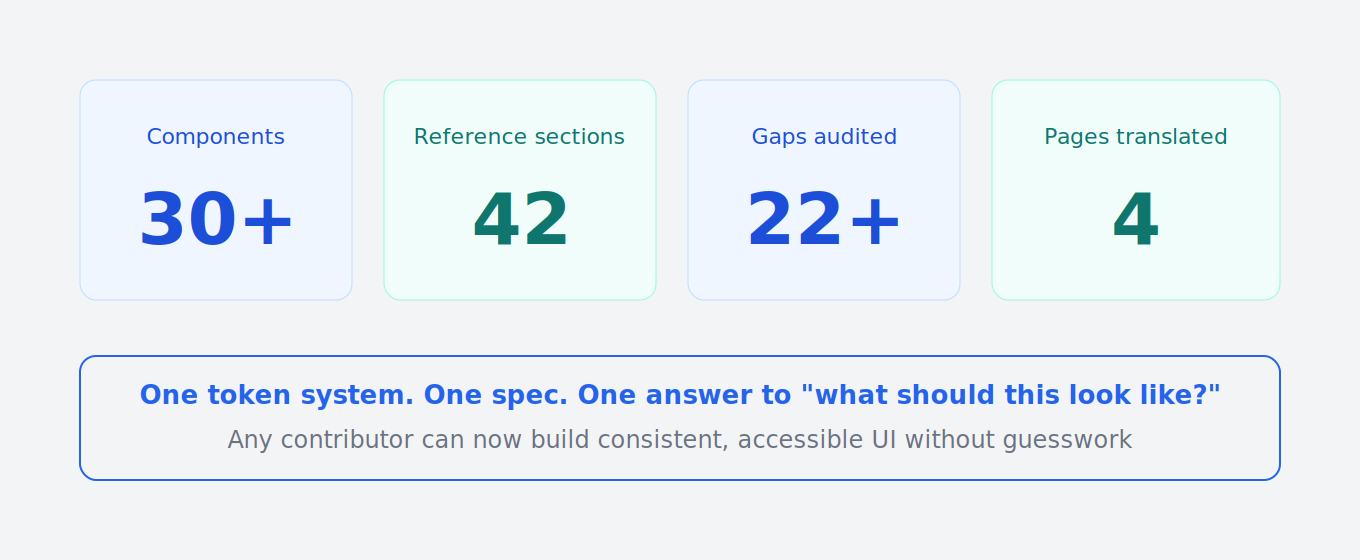
A from-scratch design system initiative to bring consistency, accessibility, and speed to a complex enterprise platform.
Platform Design System
THE PROBLEM
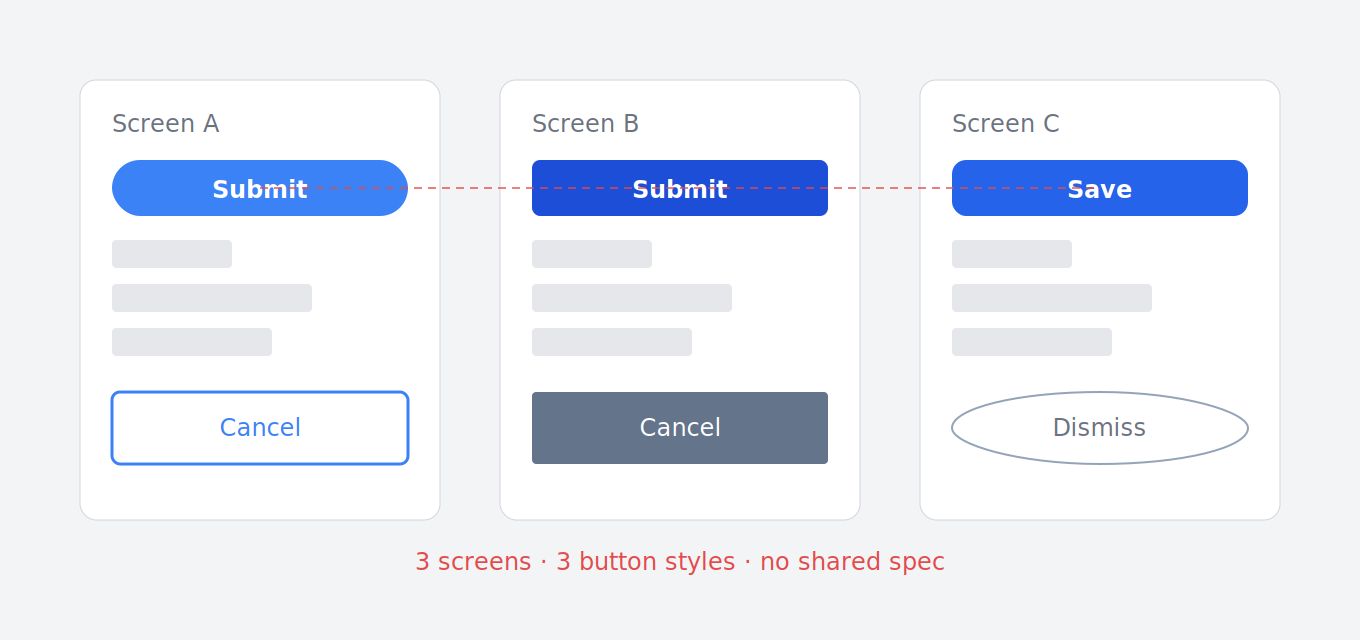
No single source of truth. Component implementations varied screen to screen, token usage was improvised, and there was no process to stop pattern drift before it hit production. Every new build started from scratch.
FOUNDATION
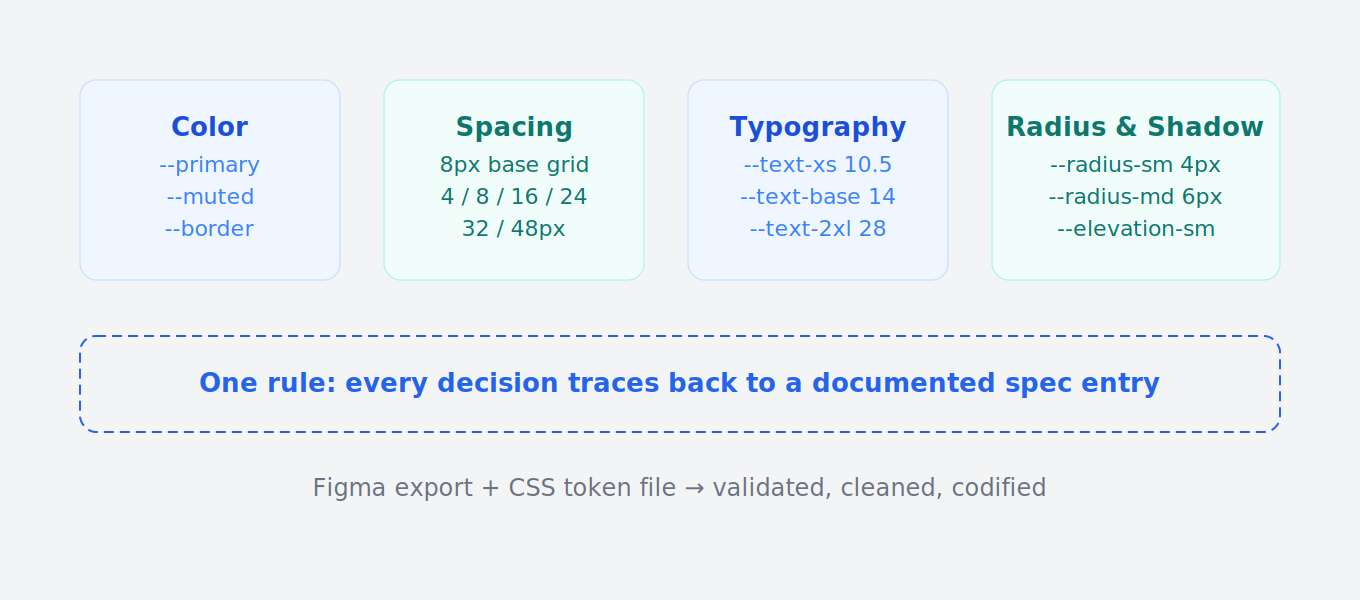
Started by auditing the raw Figma-exported spec and CSS token file. Cleaned the token set, resolved namespace conflicts, and established one non-negotiable rule: every build decision has to trace back to a documented spec entry.
RATIFICATION
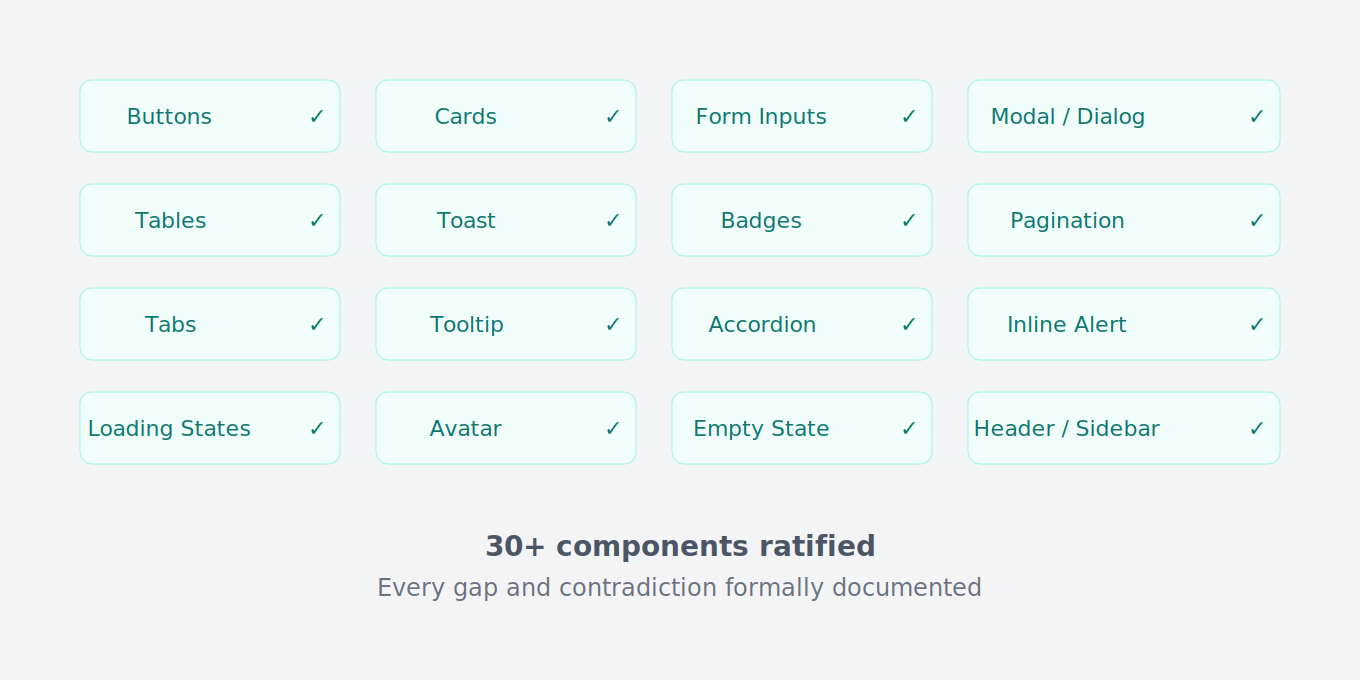
Worked through 30+ components, including buttons, cards, tables, modals, forms, loading states, and more, formalizing each one. Where the spec was silent or contradictory, decisions were made, documented, and ratified. No silent improvisation.
GAP AUDIT
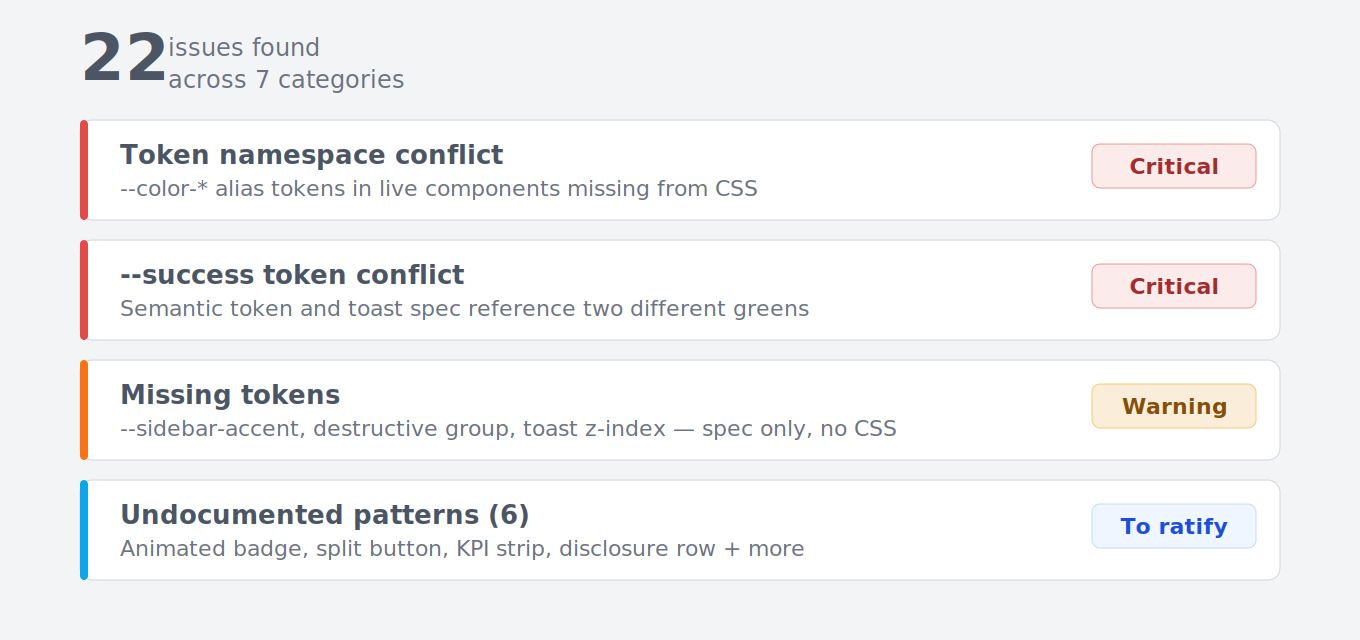
A formal audit of the source files surfaced 22 real issues across 7 categories which included token conflicts, missing variables, undocumented patterns. Found them before they became production bugs.
PAGE TRANSLATIONS
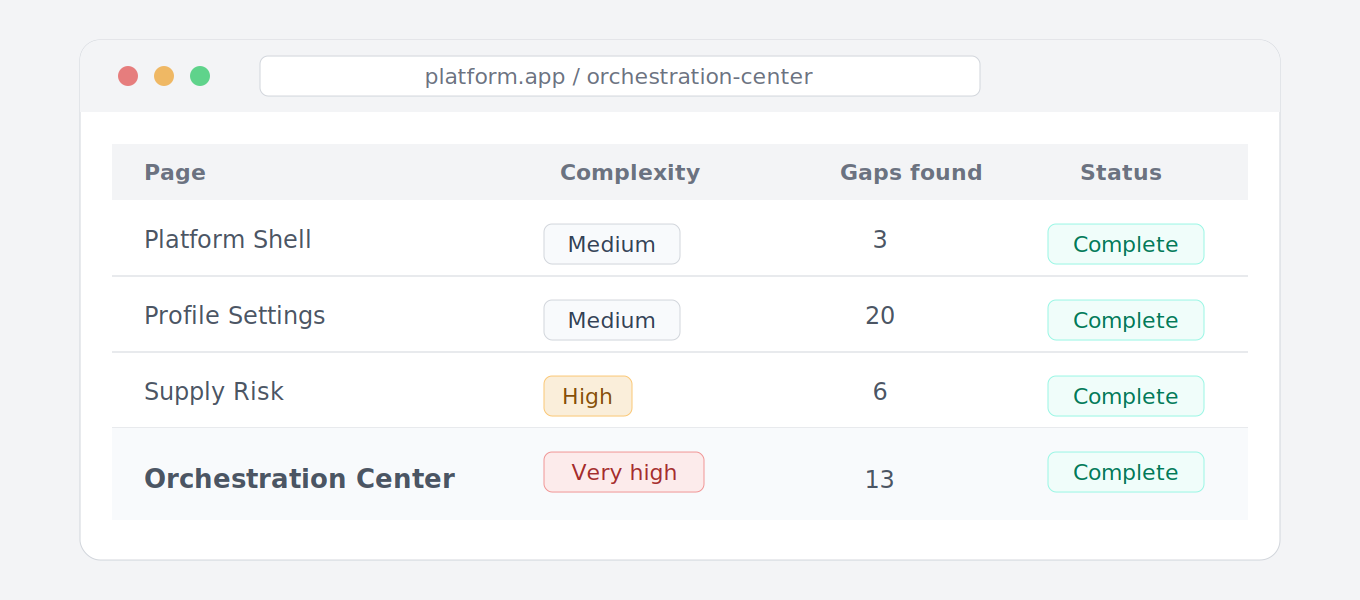
Translated 4 live product pages into spec-compliant HTML, including the Orchestration Center which is a high-complexity screen with charts, exception items, tables, and real-time data patterns. Built in a single session using the ratified system.
THE RESULT
A living reference document at 42 sections. A token system any contributor can follow. A design system that answers "what should this look like?" before anyone has to ask.